Building a Strong Brand Identity: Why It Matters for Small Businesses

In a marketplace saturated with products, services, and messages, brand identity is no longer a luxury—it’s a necessity. For small businesses, establishing a strong brand identity isn't just about having a fancy logo or catchy tagline; it’s the cornerstone of trust, recognition, and growth. A clear, consistent brand identity can be the very thing that sets a small business apart from larger competitors and creates lasting customer loyalty.
What is Brand Identity?
Brand identity refers to the visual, verbal, and emotional elements that define how a company presents itself to the world and how it wants to be perceived by its target audience. It includes the name, logo, colour palette, typography, design style, tone of voice, messaging, and even customer experience. It’s not just what a brand says, but how it says it—and how consistently.
In essence, brand identity is the promise a business makes and keeps to its customers. It shapes perceptions, drives decisions, and determines whether a customer comes back or moves on.
Why Brand Identity Matters for Small Businesses
1. First Impressions Matter
Consumers today make snap judgments. A visually appealing, professionally presented brand identity can immediately instill trust, even before a single product is sold or service delivered. For small businesses competing with large corporations, that first impression can mean everything.
A powerful brand identity gives the impression of credibility and reliability, making even small or new businesses seem established and trustworthy.
2. Builds Recognition and Recall
In a cluttered digital and physical landscape, being recognizable is half the battle. Strong brand identity ensures that customers can easily identify and remember your business across platforms—whether it’s on social media, signage, packaging, or websites.
Take Coca-Cola’s signature red or Apple’s minimalist design. For small businesses, building even a fraction of that consistency boosts chances of long-term recognition.
3. Creates Emotional Connection
Great branding goes beyond logic; it taps into emotion. When customers feel an emotional connection to a brand, they are more likely to be loyal, advocate for it, and forgive minor mistakes.
A small local bakery with warm, cozy branding and friendly language can create a loyal following that a generic chain store may never achieve. This emotional resonance is a key differentiator.
4. Guides Marketing and Messaging
A well-defined brand identity provides a blueprint for all communications—ads, social posts, customer emails, and in-store signage. It ensures a consistent tone, style, and message.
This consistency builds familiarity, and familiarity breeds trust. It also makes marketing more efficient, as businesses don’t have to reinvent their messaging for every campaign.
5. Enhances Trust and Credibility
Consumers are wary of unknown brands, especially when it comes to online transactions. A strong, cohesive brand identity gives small businesses a professional image that instills confidence.
When everything from the website to packaging looks intentional and aligned, it signals attention to detail and a customer-first approach—traits that naturally build trust.
6. Supports Premium Pricing
A clear and premium-looking brand identity can allow a small business to charge higher prices. People are often willing to pay more for brands they perceive as high quality or emotionally aligned with their values.
Think of artisanal soap brands, boutique clothing labels, or niche service providers—all leveraging brand identity to elevate perceived value.
7. Attracts the Right Customers
Branding acts as a filter—it attracts your ideal customers and repels those who aren’t a good fit. This alignment leads to better customer satisfaction, fewer complaints, and higher retention.
For example, a hip, youth-focused café with bold colours and slang-filled copy will attract a younger crowd, while a clean, sophisticated aesthetic might appeal to professionals.
Elements of a Strong Brand Identity
To build a strong brand identity, small businesses must focus on these essential elements:
1. Brand Name and Logo
Your brand name should be memorable, relevant, and easy to spell. Your logo, meanwhile, should reflect your values, product, or mission while being versatile and scalable.
2. Colour Palette
Colours convey emotions. Blue often signals trust, red implies excitement, green conveys eco-consciousness. A consistent colour palette reinforces brand recognition.
3. Typography
Fonts should be legible and appropriate for your brand tone—whether modern, classic, playful, or serious.
4. Voice and Tone
Is your brand formal or friendly? Inspirational or quirky? Your brand’s voice should reflect your audience and values and be used consistently across platforms.
5. Imagery and Design
Visuals used in branding (photos, graphics, icons) should align with your identity. A tech brand might use sleek, high-contrast images, while a wellness brand may prefer natural, soft visuals.
6. Core Values and Mission
What does your brand stand for? Clearly defined values and a mission statement give your brand purpose, guiding internal decisions and external communications.
How Citymapia Helps Small Businesses Build Brand Identity
In the age of digital transformation, platforms like Citymapia are empowering small businesses to develop, showcase, and maintain a strong brand identity with ease and affordability.
Citymapia is not just a business listing platform; it's a complete ecosystem designed to help local businesses create a digital presence that mirrors their brand identity. Here's how:
1. Custom Business Webpages
Citymapia allows businesses to create personalized web pages that reflect their unique brand style. From logos and colors to content and layout, small businesses can maintain brand consistency while reaching customers online.
These webpages act as digital storefronts—optimized for search, mobile-friendly, and easily shareable.
2. Visual Branding Tools
Citymapia supports rich visual content. Businesses can upload branded banners, videos, and portfolios—enhancing their visual identity and emotional appeal.
Whether it's a restaurant showcasing dishes or a boutique displaying handcrafted products, visuals help cement brand recall.
3. Digital Business Cards (ProCards)
Citymapia offers ProCards, which function like smart business cards. These digital identity tools carry your logo, contact details, social links, and branding—giving you a professional presence in every interaction, online or offline.
A ProCard makes a lasting impression during networking, exhibitions, or customer follow-ups.
4. Unified Messaging System
With built-in customer communication features, Citymapia enables businesses to respond with a consistent brand voice—whether it’s inquiries, promotions, or updates.
This is essential for maintaining a professional, recognizable identity across channels.
5. Brand Analytics
Citymapia offers insights into customer behaviour—like how many views your page gets, what content performs best, and which products are trending. This data helps you align your branding with real customer preferences.
6. Social Media Integration
Citymapia integrates seamlessly with social platforms. This allows businesses to maintain the same brand identity across their Facebook, Instagram, WhatsApp, and more—ensuring that customers receive a unified experience.
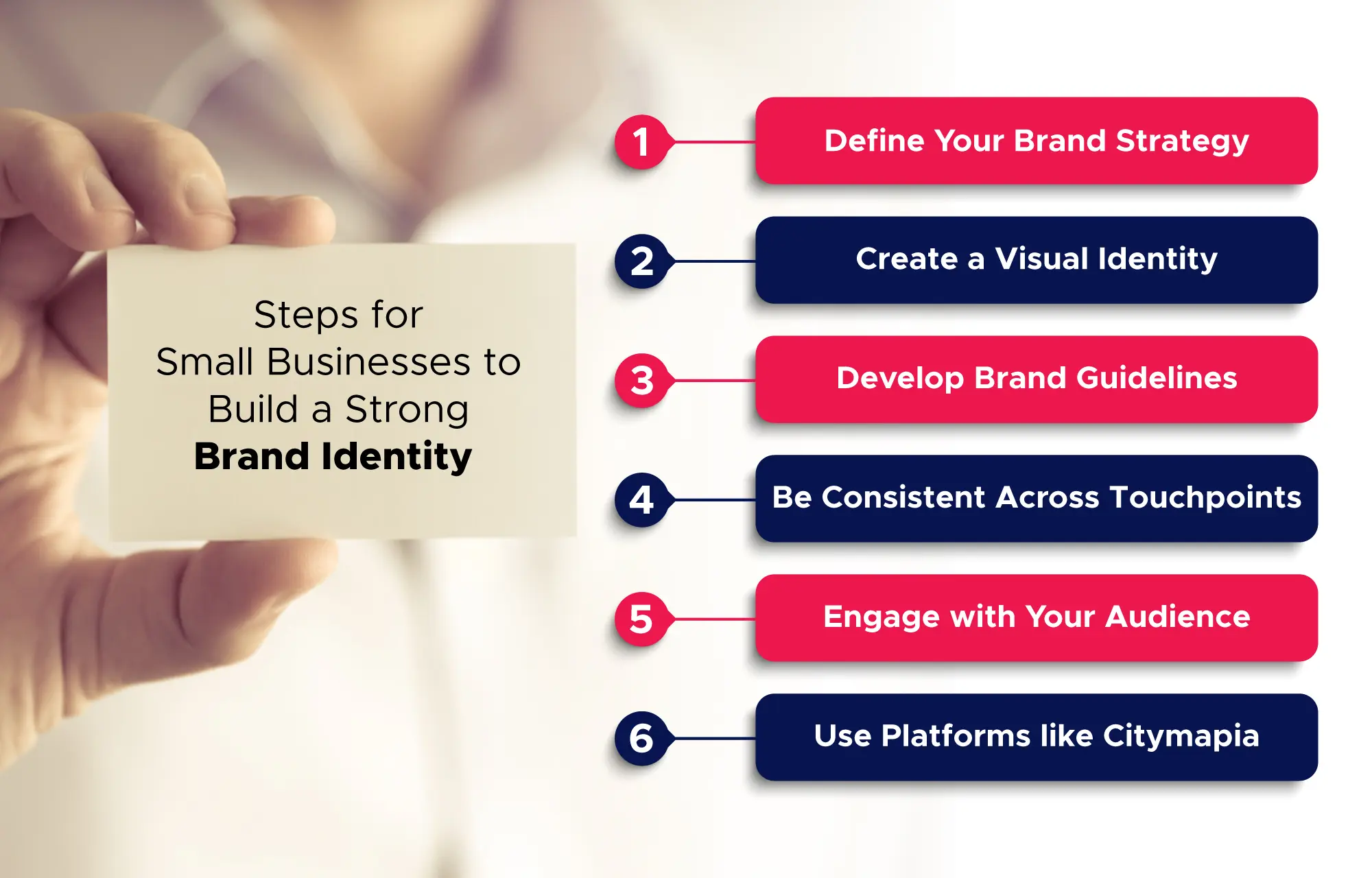
Steps for Small Businesses to Build a Strong Brand Identity
1. Define Your Brand Strategy
Ask: What do we stand for? Who is our audience? What makes us different? This will guide all branding efforts.
2. Create a Visual Identity
Design a logo, choose a colour palette, select fonts, and determine your imagery style. These should reflect your values and appeal to your target market.
3. Develop Brand Guidelines
Document rules for using logos, writing content, creating graphics, and interacting with customers. This ensures consistency across staff, platforms, and campaigns.
4. Be Consistent Across Touchpoints
From your website and social media to packaging and customer service, maintain a consistent tone and look. Consistency reinforces brand identity.
5. Engage with Your Audience
Authentically interact with your customers. Show your personality, share behind-the-scenes stories, and respond with empathy. Engagement strengthens identity.
6. Use Platforms like Citymapia
Leverage digital platforms that support your branding journey. Citymapia gives small businesses the infrastructure to showcase, manage, and grow their identity at scale.
As a whole
In competitive business environment, having a strong brand identity is not optional—it’s foundational. For small businesses, it creates a level playing field, enabling them to punch above their weight and forge genuine customer relationships.
Brand identity is more than a logo or a name; it’s how a business lives in the minds and hearts of its customers. It communicates who you are, what you stand for, and why people should choose you.
Platforms like Citymapia are making this journey easier, faster, and more impactful—empowering small businesses to build digital identities that truly reflect their essence. Whether you're a startup or a seasoned local business, investing in your brand identity is investing in your future.


